

Whenever I choose to create a cover, I typically select a song from my collection of favourite tunes that I find enjoyable to both listen and sing along to. But there are a select few that I never pick. And the reason I don’t pick them is that I love them so much. I don’t think I’ve made it far enough in my music journey to do them justice. Now & Always is one of those songs. I’m a huge fan of the song, and an even bigger fan of the artist - Kotrell. In the last few weeks, I decided regardless of my skillset, I’ll take a stab at it. I’ve been putting it off for a while.
Like always, you can skip right to the last section if you just want to hear the cover. If you’re interested in the process and learning some new chords, continue reading.
The Instrumentals
The key signature for the song is A major. It has a Beat Per Minute (BPM) of 136, and a chord progression of 4, 1, 5, 6 (using the number system). The song sounds beautiful on the A major scale, but I wasn’t confident my vocals would be great on it. So I made the cover on the E major scale instead.
At 136 BPM, the pace of the song is not too fast, and not too slow, just right up my alley. And if you’ve been following my music related posts so far, you’d notice that the chord progression much like most popular songs follows the 1, 5, 6, 4 pattern, just arranged differently e.g. the last cover I did, “Love Me Jeje” by Tems has the chord progression 1, 4, 5, 6.
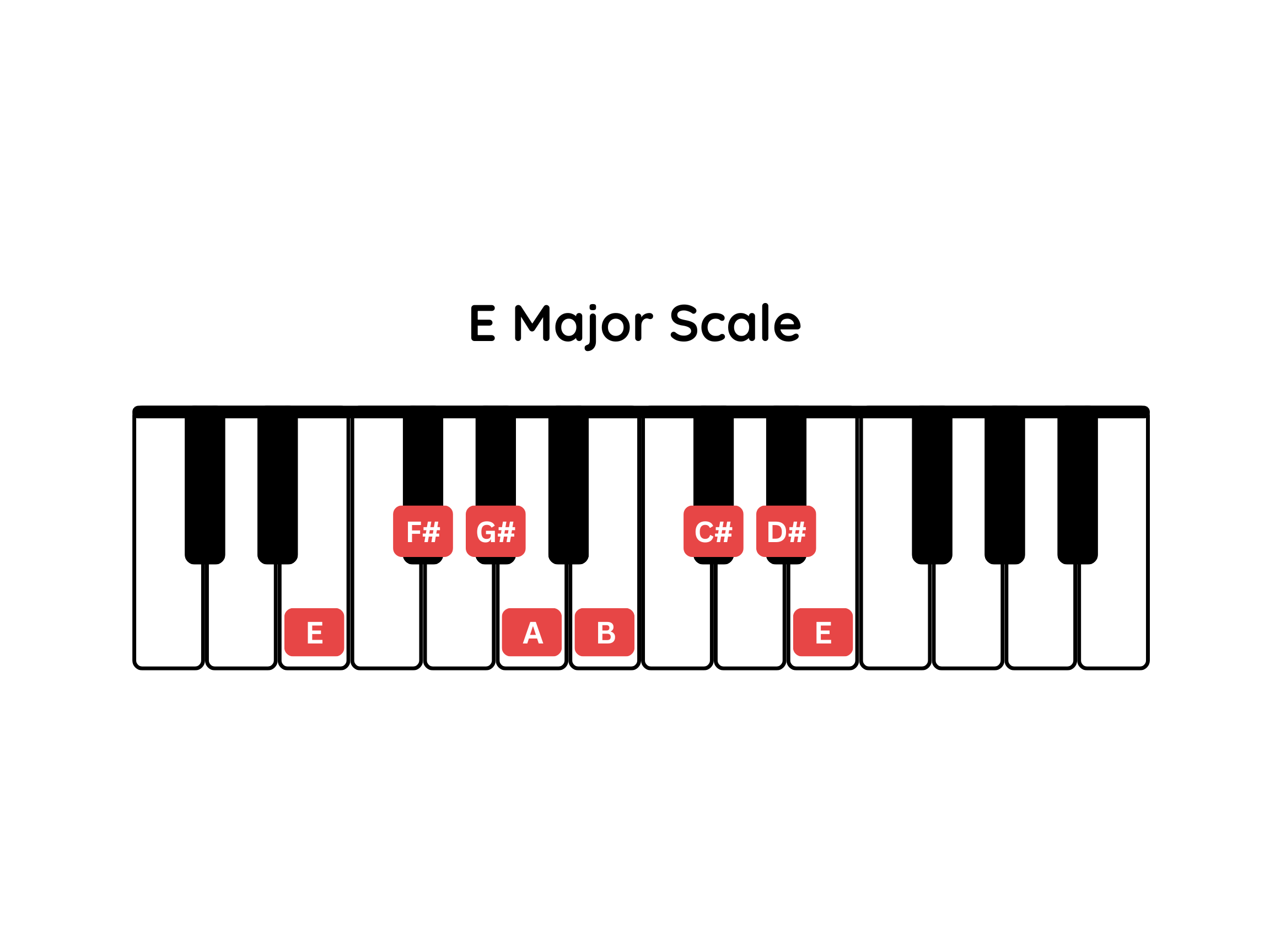
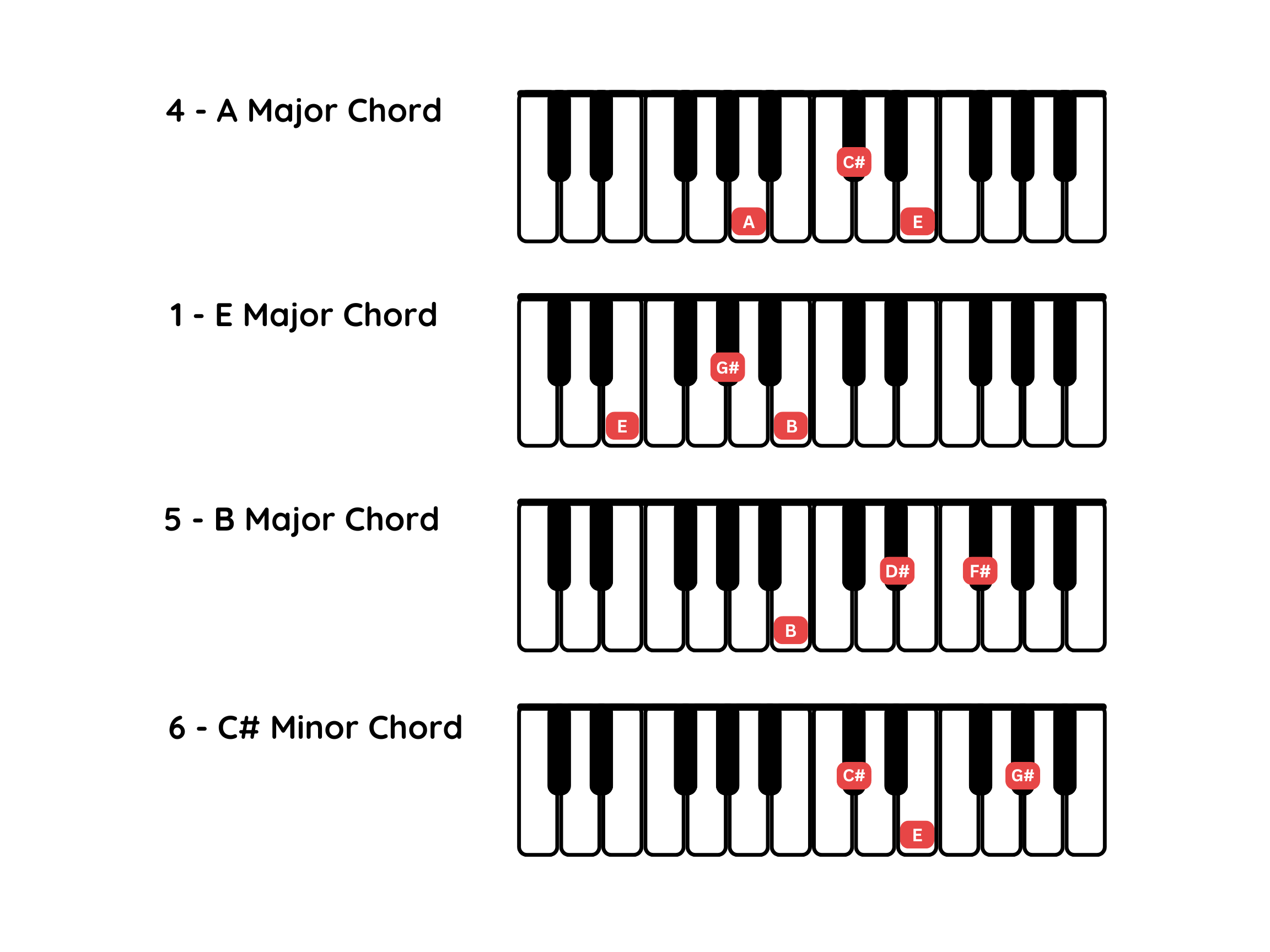
The keys in E major scale are E, G#, F#, A, B, C#, and D#. So 4 would be A (A major chord), 1 would be E (E major chord), 5 would be B (B major chord), and 6 would be the C# (C# minor chord).
Once the base chords were done, I imported the original song into Logic Pro and used it as a reference track to make sure that I got the groove and timing of the song right. I then added transitions notes between some chords to make it sound less boring e.g. Between the C# minor chord and A major chord, I’d play G#.
Chord Progression without transition notes:
Chord Progression with transition notes:
The song also has a signature guitar melody at the beginning, and I wanted to capture that. After a couple of tries, I figured it out. The melody was just the first 3 notes on the scale, repeated continuously. The sequence being, (E, G#, F#), (E, G#, F#), and so on. I then played and recorded that.
Like the base chord progression, I added a transition note after each iteration of the group of 3 notes. So I ended up with (E, G#, F#), F#, (E, G#, F#), A, (E, G#, F#), F#, (E, G#, B), E. For the last iteration of the group of notes, I changed the last note to B, to make the melody less monotonous.
Next, using the sound library in Logic Pro, I converted the sound generated by the MIDI notes from piano to a steel string acoustic guitar.
Finally, for the second verse of the song, using the same steel string guitar sound, I free styled a melody for the second half of it. Remember, as long as you play the right notes that belong to a song, it really doesn’t matter what keys you play. If you stay in rhythm, it will sound good.
The Vocals
As usual, this took the most time to get done. The reason I love the original vocals is not just because of the vocal gymnastics by the artist, it’s also because of the emotion behind the voice. He really sounds like a man making a vow to his life partner. With every word sounding so intentional and weighted. The challenge was to capture the same emotional intensity while delivering a good vocal performance.
The first step was to accept that it would be difficult to match the emotional intensity of the original song. But I could capture its essence. So I made the song mine by changing a few sentences in the first verse, and making a lot more changes in the second and having fun with it. The song now told a slightly different story but conveyed the same message.
The actual vocals took several hours and takes to get content I could live with. While far from perfect, it sounded okay. The more I do this, the more I realize how listening is such an important skill to have for this. I had to listen to the recordings multiple times and identify areas that didn’t sound quite right and needed a redo. There are still parts that I don’t quite like, but if I don’t get it out now, I might continue working on it infinitely.
The Mixing and Arrangement
For the mix, nothing complex was done. I only added some default EQ and reverb to the vocals to add some echo effect. For the arrangement, I had some fun with the second verse, layering a few ad-libs, panning some right and others left i.e. Some ad-libs will sound like it’s only coming from your right ear and others from your left, this helped to create a fuller sound.
I also brought back the steel guitar from the beginning with a different melody in the second verse, and towards the end, brought back the melody from the beginning to close it out.
As I listened to the recording, I kept thinking how great it would be to have some backup harmony added to it, but alas, that’s not a skillet I posses at the moment, but perhaps soon my covers will feature some. For now, my favourite part of the arrangement is definitely the second verse with all the ad-libs.
Like before, here’s the link to the stems if you’d like to experiment with them.
Thoughts
I loved making this one, but then again, I’ll probably say this for each one I make.
Starting early helped make the process less stressful. It allowed me to listen to it several times and increase my willingness to do multiple takes. This made the vocals come out better than previous covers - I think.
The instrumentals were simple. Sometimes, less is more. One feedback I got the last time was that having different melodies playing constantly from the beginning to the end could become monotonous and take away from the song. I’d have to agree, because introducing the steel guitar in the beginning, taking it away and then bringing it back in the end, made the song sound slightly more interesting.
There’s still room for improvement. I still have issues staying on beat sometimes. Might be worth singing with the metronome turned on (however annoying that could be) to see if it makes a significant difference.
Also, I could do a better job at acting. An artist is successful when they can convince you and themselves, that they mean every word they say, from how they say it.
Finally, I could do a lot more to my voice to make it sound even better with mixing by adding some interesting vocal effects, EQ, or just applying some more production magic. I’m slowly edging my way through Logic Pro for dummies, but happy to take any recommendations on how I can improve my sound.
The Song
Earlier, I mentioned I changed parts of the lyrics to make the song mine and have some fun with it. So here’s the back story for our character.
Prologue
A bride to be is having a panic attack because she’s two weeks away from her wedding and her dress still doesn’t fit. She spirals, leading her to think thoughts she probably shouldn’t. “She’s not that pretty”, “will her fiancé still like her over time?”, “how is this marriage thing even gonna work?”, etc.
The song is her lover’s way of re-assuring her. Hope you have as much fun listening to it as I did putting it together. Let me know what you think in the comments.
Finally, if you loved even a second of this cover, I promise you, the original song is a 100x better and you should give it a listen. Until next time.
Love love love the song! I really liked that you gave us a backstory because it made me picture the scene clearly.
Vocals 👌🏾
Thanks thanks 🙏🏽! Truly appreciate the feedback as always! You should check out the artist of the real song too, I think you’d like him. ❤️